
The 5th Life and Environmental Sciences Academics Forum (LEAF) 2024 in conjunction with
AUA Academic Conference on the Application of Sustainable Life:
Balancing Science, Technology, and Human Development
August 13th-14th, 2024
Campus Universitas Indonesia, Depok
August 13th-14th, 2024 | Campus Universitas Indonesia, Depok
free registration fee for AUA members*
ABOUT CONFERENCE


It is a great honor for us to welcome you to The 5th Life and Environmental Sciences Academics Forum (LEAF) 2024 in conjunction with AUA Academic Conference on the Application of Sustainable Life: Balancing Science, Technology, and Human Development. With the success of the previous conference, the Faculty of Mathematics and Natural Sciences, Universitas Indonesia (FMIPA UI) proudly presents this year’s LEAF conference series.
This year, the conference will be held in full offline format on the Faculty of Mathematics and Natural Science, Universitas Indonesia, Jawa Barat. Today, the world is dealing with life science and crucial environmental issues. From pollution, climate change, deforestation to the biodiversity loss and health issue. In some countries, one of the main causes is human overpopulation. Particularly in Indonesia, environmental problems are closely related to the significant increase of population density. These problems need to be addressed by the scientists, to work out good solutions and offer contributions.
A good platform for a scientific gathering to stimulate a respectful dialogue is highly demanded. Since its founding in 2017, the LEAF conference series has served its main purpose: facilitating a convenient platform where academics, scholars, and researchers from any environmental-related disciplines can meet, build networking, and develop new collaborations.
This event allows scholars to present their works, exchange ideas and discuss their most recent research findings and foster a conducive environment. We warmly welcome students, academics, and researchers to register and have a rewarding experience from this event.
For AUA member universities, there will be a registration fee waiver available with limited slots.
COLLABORATOR

KEYNOTE SPEAKERS
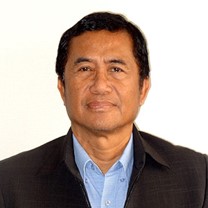
Prof. Jatna Supriatna
Universitas Indonesia, Indonesia
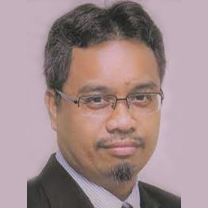
Prof. Dr. Rosli Ramli
Universiti Malaya, Malaysia
INVITED SPEAKERS
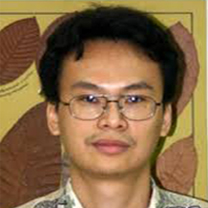
Dr. Yong Kien Thai
Universiti Malaya, Malaysia
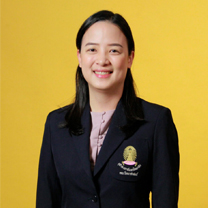
Sita Virakul, Ph.D.
Chulalongkorn University, Thailand

Dr. Abang Mansyursyah Surya Nugraha
Nanyang Technological University, Singapore

Associate Prof. Dr. Muggundha Raoov
Universiti Malaya, Malaysia
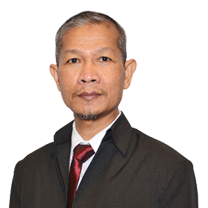
Dr. rer. nat. Yasman
Universitas Indonesia, Indonesia
ABSTRACT SUBMISSION
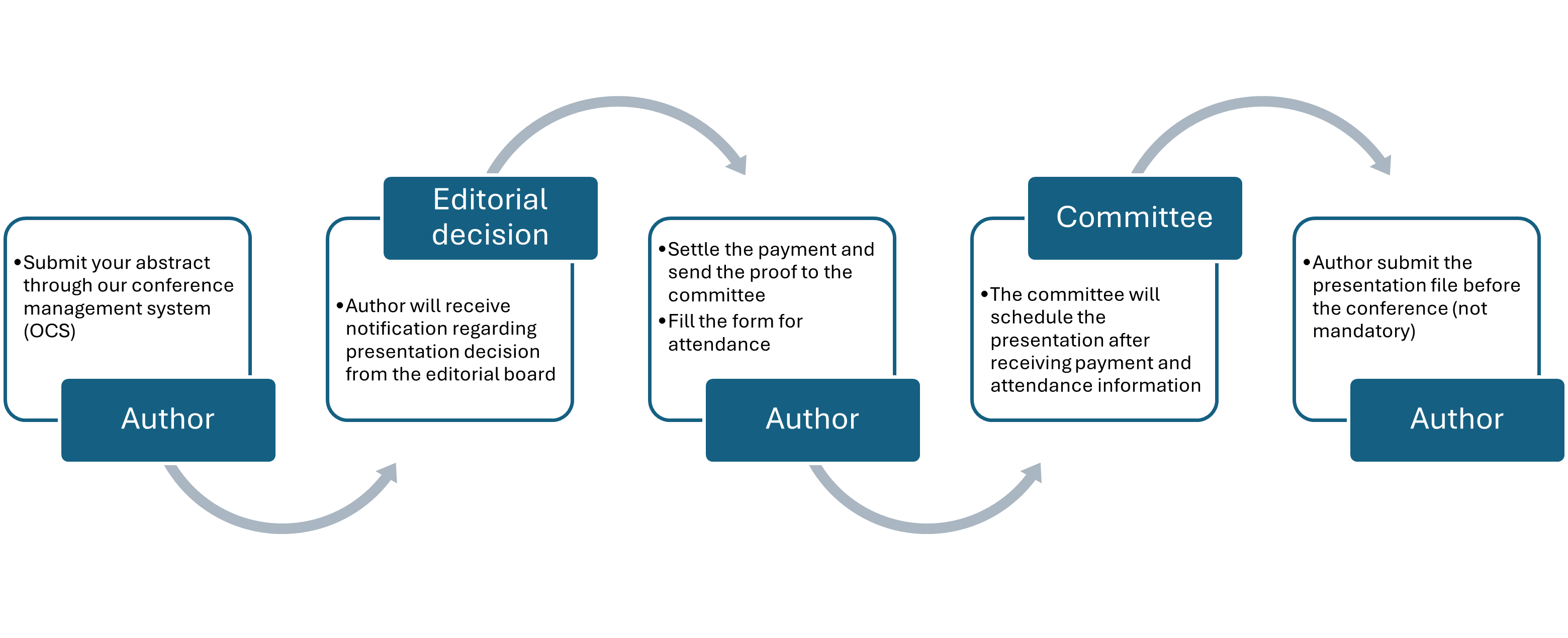
- Abstract and full paper must be submitted through our conference management system (OCS). Registration and login are required to submit items online, receive a paper ID, and check the status of current submissions.
- For the abstract template, please download it at https://bit.ly/AbstractTemplateLEAF2024.
- Please submit your abstract using the following link: https://bit.ly/AbstractSubmission-LEAF2024.
- If you do not have account, you need to register first using the link above.
- Registration for participants of non-presenters at https://bit.ly/RegistrationParticipant-LEAF2024.
PREPARING YOUR MANUSCRIPT
- Publication in IOP Conference Series: Earth and Environmental Science** (Indexed by Scopus): https://iopscience.iop.org/journal/1755-1315.
- Please use the following link to download the paper format for BIO Web of Conferences: https://publishingsupport.iopscience.iop.org/author-guidelines-for-conference-proceedings/.
NO SHOW POLICY
The selected paper that will be published, must be presented at the conference by one of the authors. Papers which are not presented at the conference shall be deemed “no-show”.
Abstract Submission Deadline: August 7, 2024
Notification of Abstract Acceptance: August 9, 2024
Early Bird Registration: August 3, 2024
Full Paper Submission: August 28, 2024
Notification of Paper Acceptance: September 30, 2024
REGISTRATION
- Free registration fee for participant from AUA Universities member (limited seat). Please see http://www.asianuniversities.org/About/AUA_Members.htm for all eligible universities.
- The registration fee for Indonesian participant is as follows:
| Registration type | Early Bird | Normal Price |
| Presenter | 1.000.000 | 1.500.000 |
| Non-presenter | 700.000 | 800.000 |
- The registration fee for International participant is as follows:
| Registration type | Early Bird | Normal Price |
| Presenter | USD 70 | USD 100 |
| Non-presenter | USD 50 | USD 70 |
Publication fee in IOP Conference Series: Earth and Environmental Science** (Indexed by Scopus) for accepted paper is USD 150.
SCOPE
All basic and applied science on the area of:
Scope: Discuss methods and technologies for monitoring and assessing environmental parameters such as air quality, water quality, soil health, and biodiversity.
Key Topics:
- Advanced monitoring techniques (remote sensing, IoT sensors).
- Data analysis and modeling for environmental assessment.
- Case studies on environmental monitoring projects.
- New technologies for real-time environmental monitoring.
Scope: Explore research on climate change impacts, adaptation strategies, and mitigation efforts, including renewable energy and carbon sequestration.
Key Topics:
- Climate change impact assessments.
- Adaptation strategies for vulnerable communities.
- Renewable energy technologies and implementation.
- Carbon capture and storage (CCS) techniques.
Scope: Discuss efforts to protect and conserve ecosystems, endangered species, and biodiversity hotspots, as well as technology for sustainable solutions and bioprospecting.
Key Topics:
- Conservation strategies for endangered species.
- Ecosystem restoration and management.
- Bioprospecting for sustainable development.
- Technological innovations in biodiversity conservation.
Scope: Showcase innovations in clean energy, energy efficiency, eco-friendly technologies, sustainable materials, and manufacturing, waste management and recycling, and nanotechnology applications.
Key Topics:
- Clean energy technologies (solar, wind, bioenergy).
- Sustainable materials and manufacturing processes.
- Waste management and recycling innovations.
- Environmental applications of nanotechnology.
Scope: Explore the impact of environmental factors on health and well-being, including biomedical, biochemistry, biophysics, bioengineering, and biotechnology advancements.
Key Topics:
- Health impacts of environmental pollutants.
- Biomedical technologies for environmental health.
- Advances in bioengineering and biotechnology.
- Biophysics and biochemistry of environmental interactions.
Scope: Cover a broad range of topics related to Earth sciences and environmental sciences, including geological, atmospheric, hydrological, and ecological studies.
Key Topics:
- Geological processes and natural hazards.
- Atmospheric science and weather patterns.
- Hydrology and water resource management.
- Ecosystem dynamics and environmental changes.
Scope: Explore the physical and human aspects of geography and geosciences, including the study of Earth’s processes, landforms, and the interaction between humans and their environment.
Key Topics:
- Physical geography (landforms, climate, vegetation).
- Human geography (urbanization, population dynamics, cultural landscapes).
- Geosciences (geology, geophysics, geochemistry).
- Geographic Information Systems (GIS) and remote sensing applications.
COMMITTEE
Steering Committee
- Prof. Dede Djuhana, Ph.D.
Universitas Indonesia - Prof. Dr.rer.nat. Budiawan
Universitas Indonesia - Dr. Tito Latif Indra
Universitas Indonesia
Advisory Board & Scientific Committee
- Prof. Dr. Jatna Supriatna
Universitas Indonesia - Prof. Dr. Dimyati
Universitas Indonesia - Prof. Anom Bowolaksono, Ph.D.
Universitas Indonesia - Prof. Ryota Nagasawa
Tottori University, Japan
Organizing Committee
- Dr. Windri Handayani
- Dr. Dipo Aldila
- Dr. Reza Syahputra
- Dr. Ade Irma Elvira
- Tety Maryenti, Ph.D.
- Aprilia Inggri Astuti, M.Si.
- Yustin Sinta Dewi, S.Si.
- Evi Nurvianti, A.Md.
- Fariz Hafizi Roihan, S.Sn.
CONTACT
For questions regarding the scientific programme please contact:
- +62-859-2454-5075
For technical questions regarding the registration and submission please contact:
The 5th LEAF 2024 Committee
- leaf_5th@sci.ui.ac.id
- +62-813-1899-3967 (CP: Ms. Aprilia, Whatsapp only)
- Office Hours: 08.00 am – 04.00 pm / Monday – Friday
*registration fee waiver available with limited slots
**in confirmation